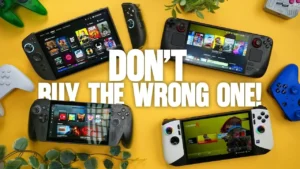
A couple of years ago i entered the world of handheld gaming, I bought a Steam Deck on a whim. I went for the cheapest model thinking I’d probably return it—but to my surprise, it completely blew me away. The idea of carrying my entire Steam library on a portable device that I could just pick up and play anywhere? It felt like the ultimate gaming solution for clearing out my massive backlog.
Sure, I had to make peace with sacrificing performance for portability, but the potential was undeniable. Fast forward to 2025, and the handheld gaming scene has exploded. What started with a few niche devices from Chinese manufacturers and Valve’s early lead has now turned into a full-blown war between tech giants.
Over the past 4 months, I’ve tested eight flagship handheld gaming PCs, putting each one through its paces across six key categories to help figure out: what’s really the best handheld device out there right now?
Keep in mind, this is a subjective journey. You might value some features more than others, and that’s totally valid. I’ve created a 10-point scoring system for each category, so you can use it as a rubric and apply your own preferences. Let’s jump in!
Display Quality
This category has seen some serious upgrades across the board.
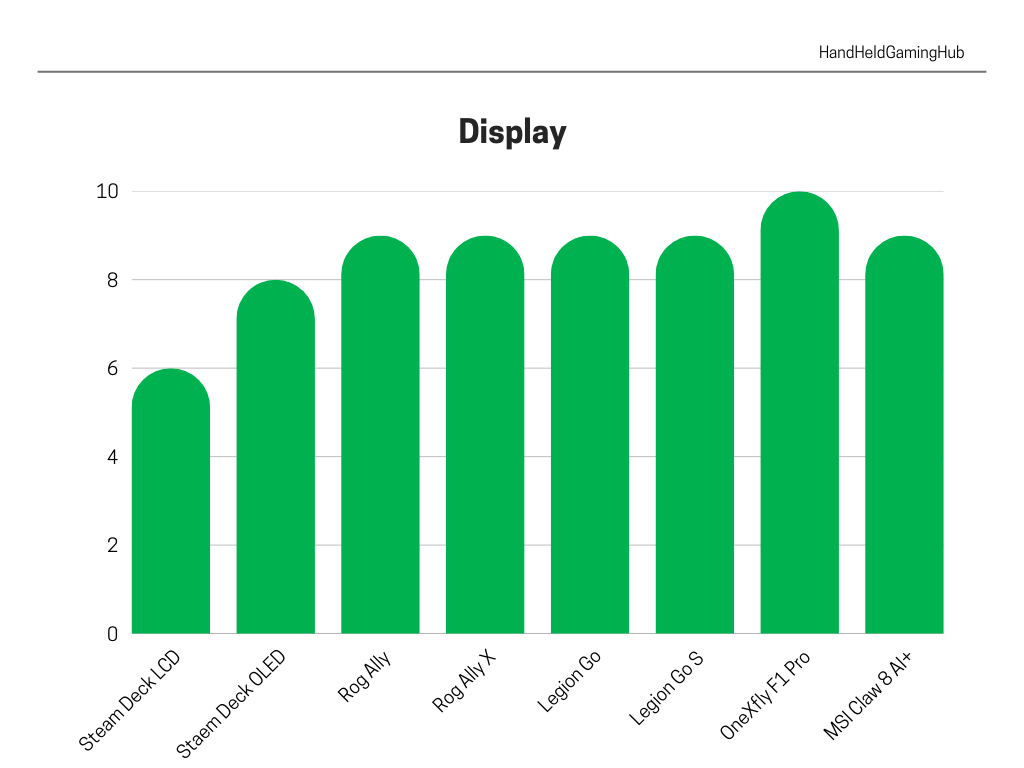
Most high-end Windows handhelds now feature 1200p–1600p displays with high refresh rates (120–144 Hz). The Lenovo Legion Go, MSI Claw, and Legion Go S all feature large, bright LCDs. The Asus ROG Ally and Ally X rock crisp 1080p 120 Hz displays, with the added bonus of variable refresh rate (VRR) support, which smooths out gameplay during FPS dips.
But the real game-changer? OLED displays. Valve’s Steam Deck OLED features HDR support and can hit 1000 nits peak brightness—double that of its rivals. It may be lower resolution (800p), but the contrast, color accuracy, and inky blacks create stunning visual clarity.
Then there’s the F1 Pro, which simply dominates with its 7-inch 1080p OLED at 144 Hz. It’s pricey, but the display alone is arguably worth it.
Scores:
Controls & Ergonomics
Comfort is everything when it comes to handheld gaming.
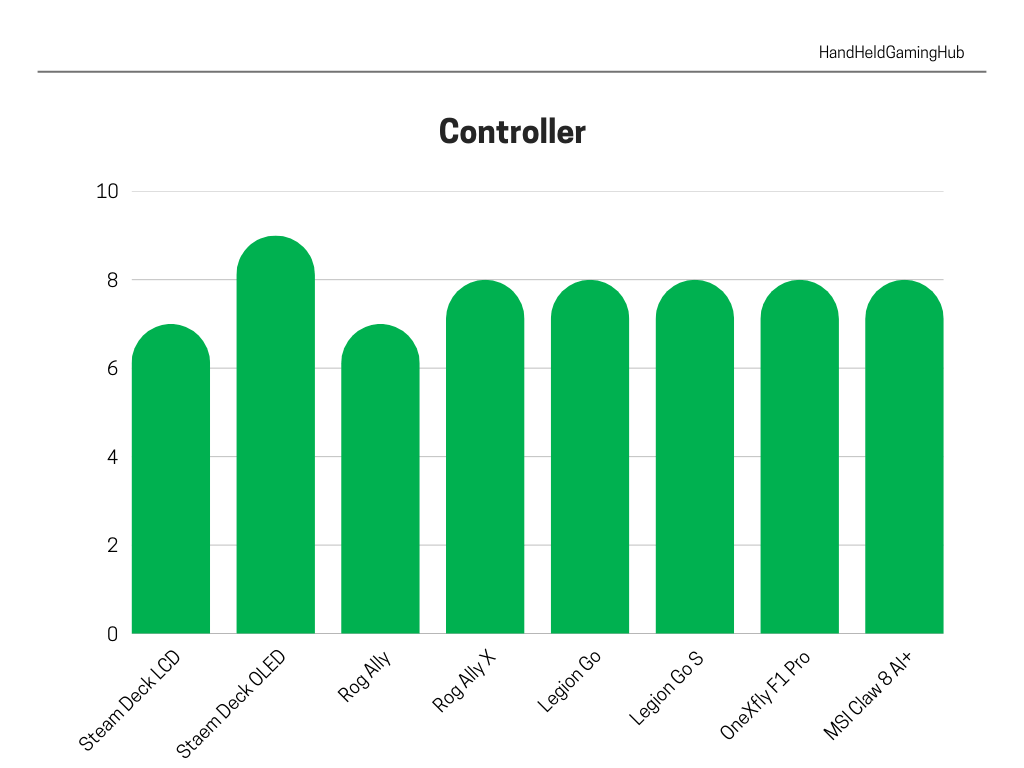
Lenovo’s Legion Go is the biggest and bulkiest, but it comes with detachable controls, rear paddles, and even trigger locks. It’s like a hybrid between a gaming PC and a Nintendo Switch. On the flip side, it’s less portable.
Asus’s Ally X hits a sweet spot—super comfy, with the best thumb sticks I’ve tested. It feels like holding a premium controller. The original Ally was solid, but the Ally X is a big step up in terms of grip and layout.
MSI Claw is ergonomic and well-built, though its D-pad is just okay. The Steam Deck OLED retains its strong haptics, customizable controls, trackpads, and incredibly versatile, especially for games like strategy sims or first-person shooters.
Unfortunately, the F1 Pro, despite its killer screen, feels more like a PSP. Smaller sticks, no rear paddles, and less tactile feedback make it feel like a step down in terms of control refinement.
Scores:
Repeatability & Aftermarket Support
This is where things really start to matter for long-term use.
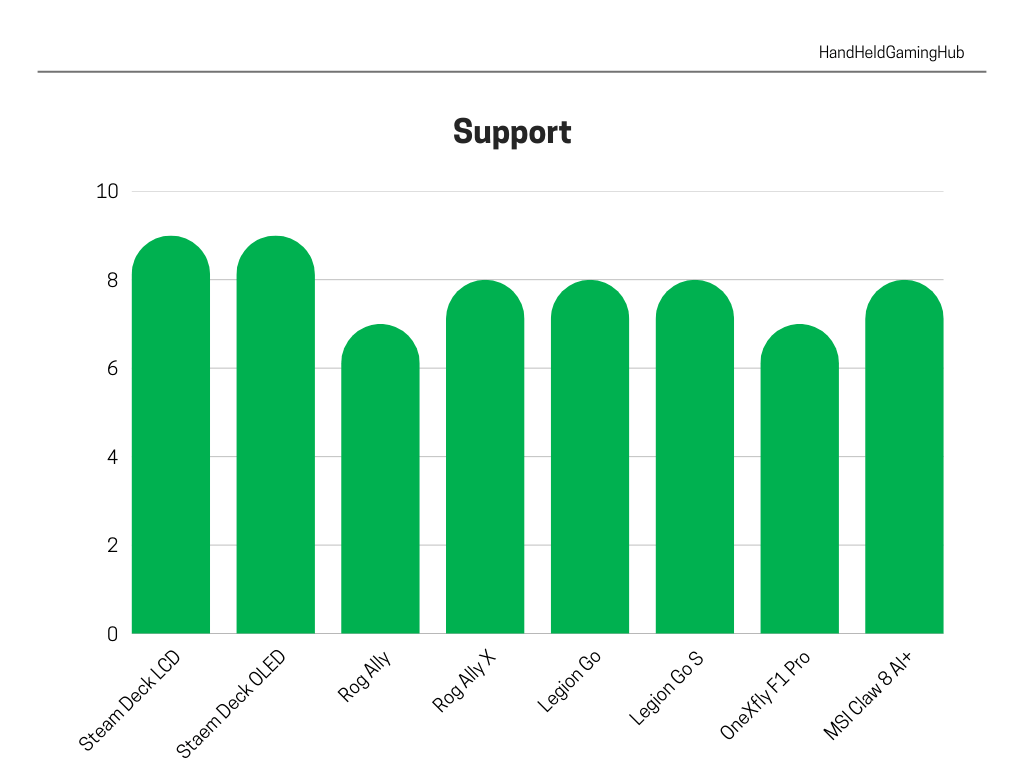
Valve wins hands down. They’ve partnered with iFixit to offer parts and repair guides, and the Deck is designed to be mod-friendly.
Asus, MSI, and Lenovo offer varying degrees of support and molecularity. Asus gets credit for making the Ally series mostly replaceable, but their customer service track record is shaky. They even faced a class-action lawsuit over the original Ally’s warranty issues.
MSI Claw had its hiccups too—I personally had one die on me, and SD card issues weren’t uncommon across the board.
OneX Player is a smaller company, and parts availability is murky at best. Niche support, limited accessories, and no widespread repair infrastructure hold it back.
Scores:
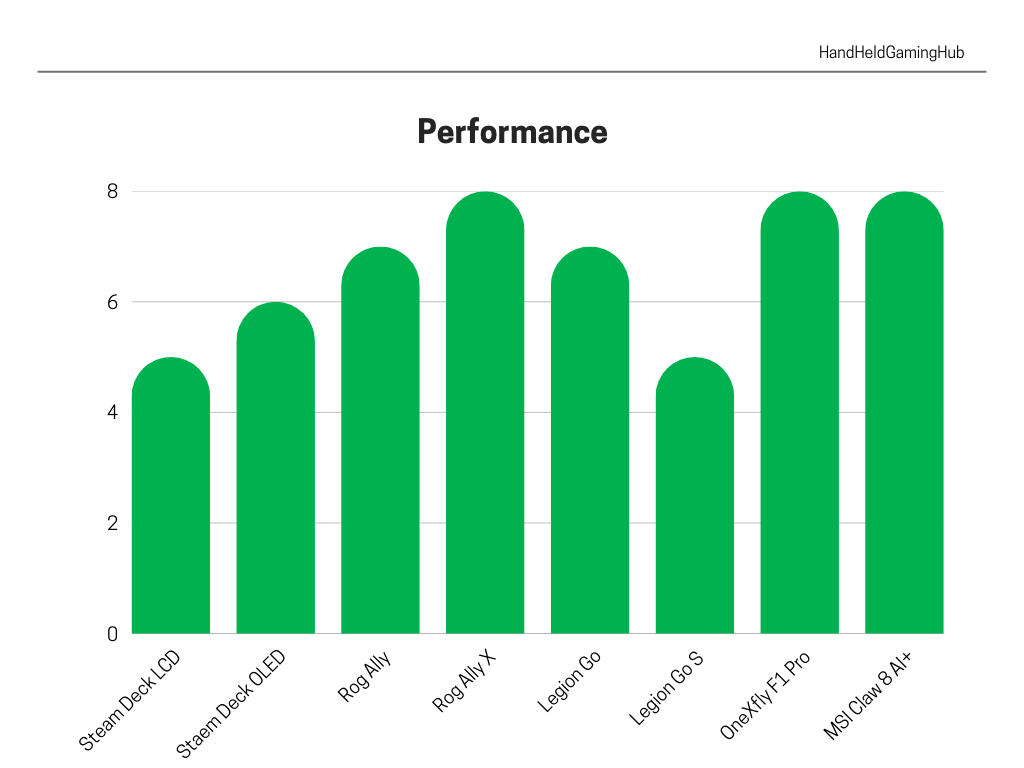
Performance
Performance is critical—and this year, we’ve seen some major leaps.
Most Windows handhelds use the AMD Z1 Extreme, which was the gold standard… until now. Devices like the MSI Claw (Intel 258V) and F1 Pro (AMD HX370) bring serious power and now outperform Z1E handhelds in raw benchmarks.
That said, the Ally X continues to be the most polished Z1 Extreme device, thanks to cooling improvements and consistent performance at higher TDPs.
The Steam Deck can’t quite keep up in raw power, but it’s incredibly efficient at lower wattage and handles indie titles and emulation like a champ.
Scores:
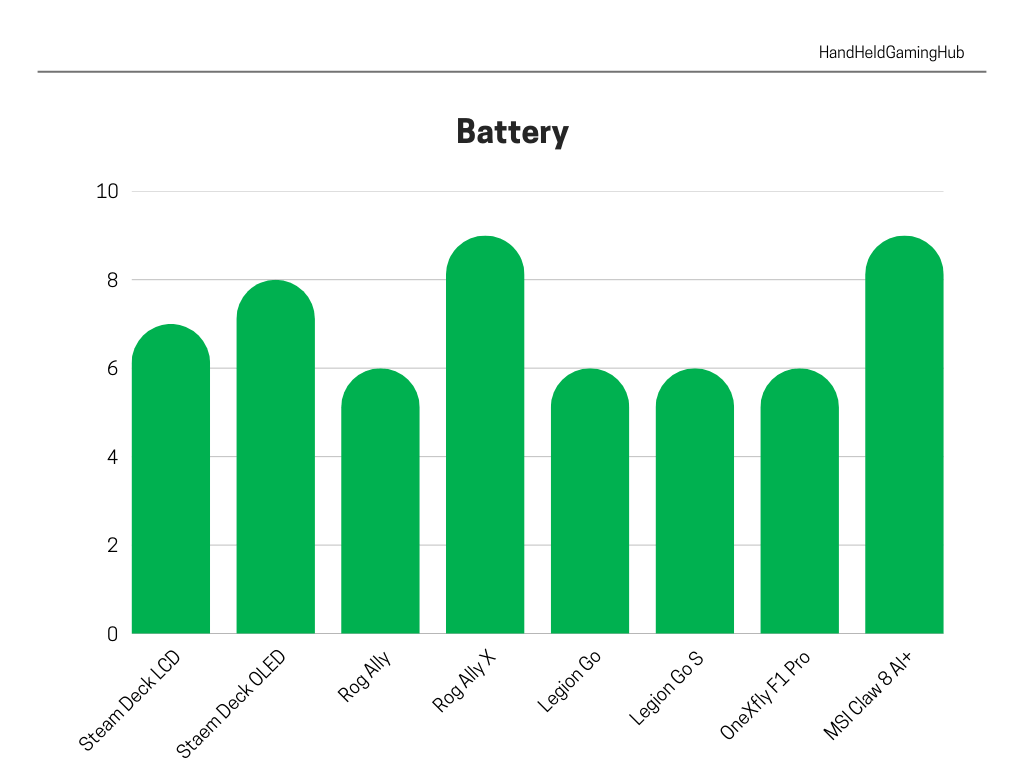
Battery Life
Big performance usually means big power drain—unless you plan smart.
Ally X and MSI Claw come with 80Wh+ batteries, making them top-tier for extended sessions. You’ll want these if you plan to play AAA games on the go.
Steam Deck makes up for its smaller battery with a custom Linux-based OS (Steam OS) that sips power efficiently. Perfect for indie games or low TDP use.
Legion Go S and original Ally have average battery life. The F1 Pro does decently for its size—but again, you’ll need to optimize settings for good mileage.
Scores:
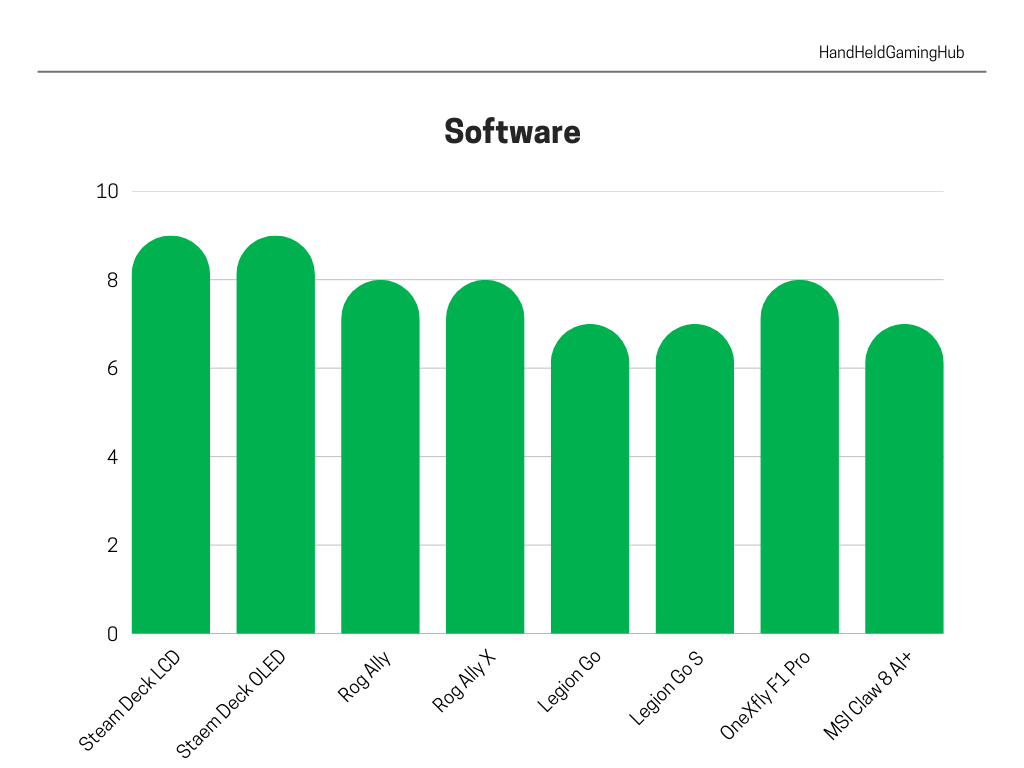
Software & Ease of Use
This is where Valve’s Steam OS really shines. It’s a console-like experience, dead simple to use, with instant sleep/wake, amazing optimization, and growing compatibility with non-Steam titles via Proton.
Windows handhelds have improved—Asus, MSI, and Lenovo have all released updates to refine their UI overlays and controls. But Windows still comes with baggage: pop-ups, crashes, or the occasional driver issue.
Surprisingly, the F1 Pro has one of the cleanest software setups out of the Windows crew. But nothing beats the polish of Steam OS.
Scores:
Final Verdict: So, Which Handheld gaming is the Best in 2025?
Based on my testing, here’s how they stack up overall:
- Asus ROG Ally X – Best All-Rounder
Great controls, performance, battery, and a refined experience across the board. - MSI Claw 8 AI+ – Best for Performance & Battery
Intel’s latest chip gives it serious power, and the massive battery keeps you going. - Steam Deck OLED – Best for Ease of Use & Value
Still unbeatable if you value comfort, OS simplicity, modding, and affordability. - F1 Pro – Best Display, Niche Appeal
Stunning screen, compact design, but not as refined in controls or battery.
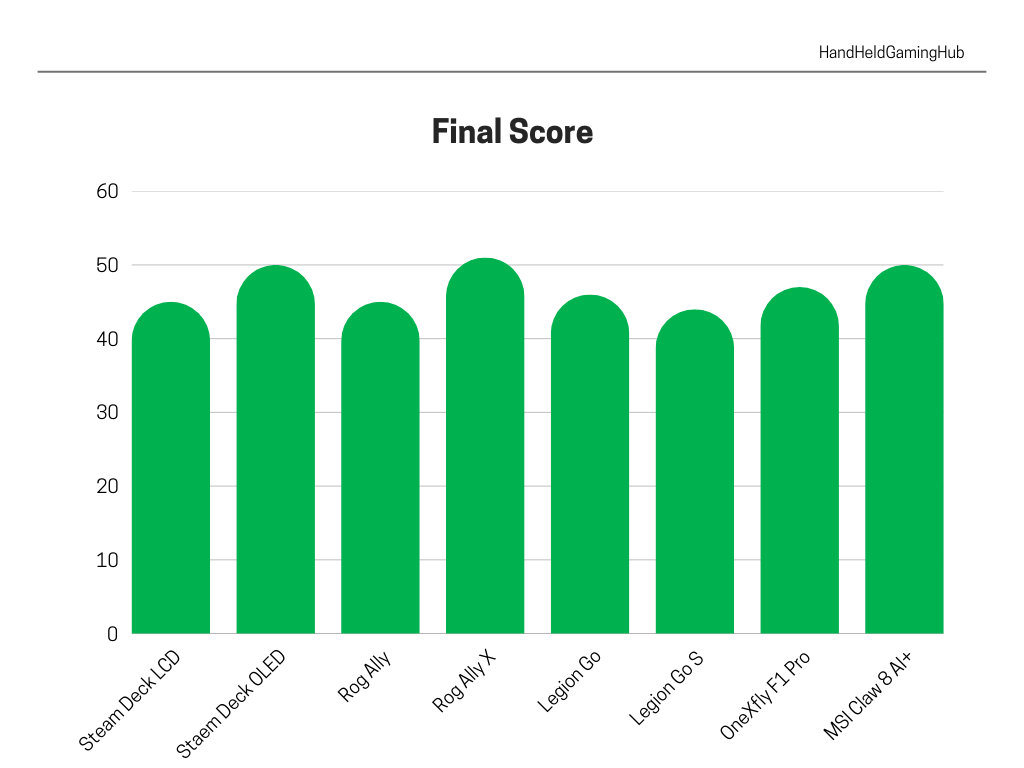
But remember: This is not a one-size-fits-all decision. Your personal preferences—whether it’s screen quality, game library, modding potential, or battery life—should guide your choice the handheld gaming for you.